Open Source Models
This Week in AI: GPT-6.2 Astra & Sol, Gemini 4 Neon, Qwen4-Max, and Inkling 2 Mini
OpenAI, Google, Microsoft, and Alibaba ship new frontier models and agents, while Inkling 2 Mini, Rumble-2-Flash, and Lapis 3.3 advance local AI.
What to try
- OpenAI shipped GPT-6.2 Astra ($8/M input, $40/M output API pricing, 20% below GPT-6 Astra) and GPT-6.2 Sol ($2/M input, $10/M output) across ChatGPT Work, Codex, and the API.
- Google launched Gemini 4 Neon (1M context at $3/M input and $15/M output), brought Genie 4 with native audio to Project Genie and the Gemini API, and rolled out Mac computer use in the US.
- Microsoft unveiled seven MAI models at Ignite alongside MAI Licensed Weights and Maia 200 chips, while Alibaba launched Qwen4-Max via API and Tencent published open weights for Hy4 flash.
- In local AI, Thinking Machines released Inkling 2 Mini (20 GB Apache-2.0 looped MoE for 32 GB+ Apple Silicon) alongside Rumble-2-Flash (0.5B ASR), MLX Swift LM 3.33.0, and Lapis 3.3 on the App Store.
This week brought a rapid wave of frontier releases from OpenAI, Google, Microsoft, and Alibaba—paired with notable open-weight and Apple Silicon breakthroughs that push capable multimodal reasoning and speech recognition onto 32 GB machines.
1. OpenAI ships GPT-6.2 Astra and GPT-6.2 Sol with lower flagship API rates
What happened: On November 17, OpenAI released GPT-6.2 Astra and GPT-6.2 Sol across ChatGPT Work, Codex, and the OpenAI API for Plus, Pro, Enterprise, and Edu plans. GPT-6.2 Astra cuts standard API token rates by 20% compared to GPT-6 Astra—to $8 per million input tokens ($0.40 cached) and $40 per million output tokens—while GPT-6.2 Sol retains GPT-6.1 Sol rates at $2 input ($0.10 cached) and $10 output. Ultrafast mode is enabled in the API for both models, available to Pro 500 subscribers on both, and rolling out to Pro 200 subscribers starting with GPT-6.2 Sol.
Why it matters: Cutting flagship token rates alongside better output-token efficiency lowers the cost of long-horizon coding and document workflows, though Ultrafast tiers remain gated to higher-end Pro plans outside the API.
2. Google launches Gemini 4 Neon and rolls out Mac computer use in the US
What happened: On November 18, Google introduced Gemini 4 Neon as its mid-tier Gemini 4 model between Hydrogen and Carbon, offering a 1M-token context window at $3 per million input tokens ($0.15 cached) and $15 per million output tokens across AI Studio, Gemini for business, Google Antigravity (Pro and Ultra), and the Gemini app. On November 19, Google also launched computer use in the Gemini app for Mac, running desktop and browser workflows inside an isolated background window with per-action approval—limited at launch to English in the US for personal Google accounts (18+) on Apple Silicon Macs running macOS Sequoia 15.0+ under Plus, Pro, or Ultra plans.
Why it matters: Gemini 4 Neon fills the price-performance gap for coding and research orchestrators, while background Mac computer use signals how desktop agents are moving beyond the browser—even as regional and plan gates limit immediate access outside the US.
When cloud launches come with regional restrictions or subscription tiers, the Lapis model catalog helps you check which open weights you can download and run offline.
3. Google DeepMind brings Genie 4 interactive worlds with native audio to developers
What happened: On November 18, Google DeepMind rolled out Genie 4 inside Project Genie for eligible Google AI Ultra subscribers (with a waitlist for AI Pro), adding mid-session text edits and real-time native audio. One day later, Genie 4 opened to developers in Google AI Studio and the Gemini API via the Interactions API, generating continuous 720p worlds at 24 frames per second with synchronized ambient audio, effects, and dialogue from text or reference images.
Why it matters: Exposing an interactive, audio-enabled world model through a developer API turns spatial simulation from a closed research demo into a programmable sandbox for prototyping games, design concepts, and embodied agents.
4. Microsoft Ignite unveils seven MAI models and MAI Licensed Weights
What happened: On November 17 at Ignite, Microsoft AI announced seven specialized models—MAI Cyber 2 Flash, MAI Code 2, MAI Code 2 Flash, MAI Image 2.7, MAI Realtime 1 (from $0.01 per audio minute), MAI Transcribe 2, and Decision 1.1—alongside production deployment of its Maia 200 accelerator. MAI Code 2 and Code 2 Flash are available in GitHub Copilot (with Code 2 Flash in limited-access preview on Microsoft Foundry), while MAI Licensed Weights will let enterprise customers customize and host MAI models inside their own Azure environments without public weight downloads.
Why it matters: Rather than pushing a single monolithic model, Microsoft is betting on specialized low-cost routing and Azure-confined licensed weights to cut enterprise inference spend—though public benchmarks cited in its posts include promotional launch pricing and internal evaluation harnesses.
5. Alibaba ships Qwen4-Max via API while Tencent opens Hy4 flash weights
What happened: On November 16, Alibaba released Qwen4-Max, a proprietary flagship multimodal model (text, image, and video) with a 1M-token context window available on Alibaba Cloud Model Studio and QwenCloud at $1.50 per million input tokens and $4.50 per million output tokens internationally. In contrast, Tencent published open weights for Hy4 flash on November 17 under the custom Tencent Hy License (Apache-2.0 derived with additional terms for large Model-as-a-Service providers), featuring 220B total parameters (including 64B Engram parameters) with 12B active per token and a 1M-token window across text and images.
Why it matters: Alibaba kept its Qwen4-Max flagship closed behind API endpoints while smaller Qwen4 open weights remain pending, whereas Tencent’s Hy4 flash gives self-hosters a new multimodal MoE option—with the caveat that its custom license restricts large commercial MaaS deployments.
6. NVIDIA opens Nemotron for Science and previews Rubin HPC at SC26
What happened: On November 17 at Supercomputing (SC26), NVIDIA introduced Nemotron for Science—pairing the open Nemotron 3.5 Super VL model with a new open chemistry dataset and post-training recipes that researchers can run on local DGX Spark units, workstations, or supercomputers—alongside quantum error-correction work with IBM and Fermilab. NVIDIA also previewed Rubin HPC, a Vera Rubin platform GPU expected in 2028 with over 50,000 CUDA cores and FP64-to-FP4 precision support.
Why it matters: While Rubin HPC remains a 2028 hardware roadmap item, open domain datasets and post-training recipes for Nemotron 3.5 Super VL are immediately usable by labs running scientific agents on their own systems.
To see how active experts and Unified Memory govern models like Inkling 2 Mini, read our guide on MoE versus dense local LLMs on Apple Silicon.
7. Local AI: Inkling 2 Mini, Rumble-2-Flash, MLX Swift LM 3.33.0, and Lapis 3.3
Open weights and Apple Silicon tooling delivered an unusually practical week for running capable models without cloud APIs:
- Inkling 2 Mini (November 17 weights, November 20 post): Thinking Machines Lab released Inkling-2-Mini under Apache 2.0, a multimodal text-and-image looped MoE (~26B physical parameters, 3B active, repeating 12 middle layers three times for 48 logical layer visits) with a 1M-token context window. As detailed in the Hugging Face launch post, its ~20 GB mixed NVFP4/MXFP8 checkpoint targets 32 GB+ Apple Silicon Macs and DGX Spark, with upstreamed MLX support (preserving native NVFP4/MXFP8), official 4-bit IQ4_NL and 8-bit Q8_0 GGUF files for Llama App and llama.cpp, plus Transformers and SGLang support.
- Rumble-2-Flash (November 18): Reson8 open-sourced Rumble-2-Flash under Apache 2.0, a 0.5B-parameter speech recognition model supporting automatic language detection across 40+ languages (averaging 6.96% WER on the Open ASR Leaderboard multilingual track) using the Qwen3-ASR architecture for native Transformers and vLLM support without custom code.
- Apple Silicon & inference runtimes: On November 17, MLX Swift LM 3.33.0 added support for Qwen 3.8, PrismML Bonsai 2 27B ternary, LiquidAI LFM3, EmbeddingGemma 2 multimodal embeddings, and DiffusionGemma on Apple devices. On November 18, a Transformers SSD streaming experiment demonstrated running the 180B-class Qwen3.8-Flash-Next on a 32 GB Mac M5 at 13.9 tok/s short decode using custom Metal kernels. On November 16, vLLM v0.34.0 enabled extensible KV caching by default and dropped Model Runner V1 for self-hosted GPU clusters.
What’s new in Lapis 3.3
Released on November 16 on the App Store for iPhone, iPad, and Mac (see our Lapis 3.3 announcement), Lapis 3.3 brings offline visual questions about videos with compatible Qwen3.5 models, Pages, Numbers, and Keynote attachments, eight on-device voices across four languages on iPhone and iPad (with Lapis Pro), the Lapi in-app help guide, Wake Mac reconnection in Lapis Link (with Lapis Pro), and simplified Lapis Flow dictation setup on Mac. Note that newly published third-party weights from this week—such as Inkling 2 Mini, Rumble-2-Flash, or Hy4 flash—run in external tools like mlx-lm, llama.cpp, Transformers, or vLLM and are not automatically included in Lapis unless validated and added to its curated catalog.
Explore all of the video, Apple document, voice, and Lapis Link additions in our Lapis 3.3 release announcement.
If you want to try local clip analysis right away, follow our step-by-step guide on how to ask questions about a video in Lapis.
Sources and references (19)
- Introducing GPT-6.2 Astra and Sol
- Introducing Gemini 4 Neon
- Let Gemini tackle repetitive chores on your Mac
- Genie 4 is now available (Project Genie)
- Genie 4 is now available on the Gemini API
- Seven new world-class models at scalable price-performance (Microsoft Ignite 2026)
- MAI Code 2 and Code 2 Flash: Everyday coding at scalable prices
- MAI Licensed Weights: Frontier performance you control
- Qwen4-Max: Your New Teammate Has Arrived
- Alibaba Cloud Model Studio Pricing (qwen4-max)
- tencent/Hy4-flash Model Card and Weights
- Ian Buck Kicks Off NVIDIA’s Week at SC26 as Science Enters the Age of Agents
- Welcome Inkling 2 Mini, Cutting-edge Performance for your Local Setup
- thinkingmachines/Inkling-2-Mini Model Card
- Rumble-2-Flash: an open 0.5B speech model for 40+ languages
- ml-explore/mlx-swift-lm Release 3.33.0
- 180B Parameters, 32GB of RAM: Pushing MoE Inference to the Limit with Transformers
- vllm-project/vllm Release v0.34.0
- AI Offline LLM Chat - Lapis 3.3 on the App Store
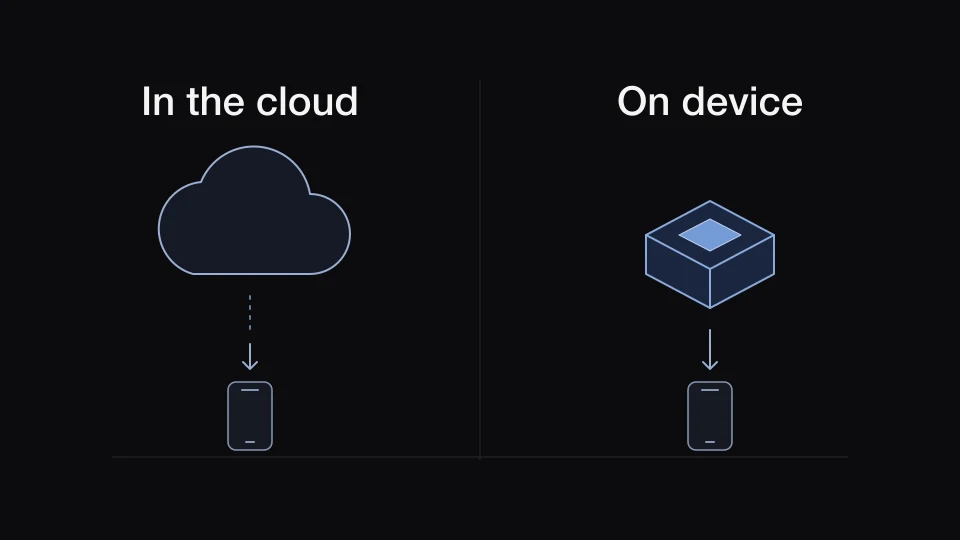
Local execution with Lapis
Chat with compatible models on iPhone, iPad and Mac. Download them once and use local inference offline; model size depends on your device’s resources.