Open Source Models
This Week in AI: NVIDIA CEO transition, Gemini 4, Claude 5.2, ChatGPT Wallet, and llama.cpp v1.0.0
Jensen Huang’s departure, new models from Google and Anthropic, and llama.cpp’s first stable release lead this week’s news.
What to try
- Google shipped Gemini 4 Carbon and Gemini 4 Hydrogen in the Gemini API (from $1.50/M input and a 1M context window in Hydrogen), while Anthropic released Claude Fable 5.2 and kicked off its Nasdaq IPO roadshow under ticker ANT.
- NVIDIA announced on November 12 that Jensen Huang stepped down as President, CEO, and board member effective immediately, with CFO Colette Kress serving as Interim CEO during the search.
- OpenAI launched tokenized payments in ChatGPT Wallet for US Pro subscribers, and Apple began shipping HomeView with Siri AI for $299 while excluding the European Union.
- In local AI, llama.cpp v1.0.0 reached its first SemVer stable release alongside Apache-2.0 GGUF releases ZONOS3-Mini and BotPsy-0.8B, Ollama v0.40.16, and Lapis 3.2 on iOS, iPadOS, and Mac.
This week, NVIDIA experienced an abrupt CEO departure, Google and Anthropic shipped next-generation frontier models alongside Anthropic’s IPO roadshow, OpenAI moved agents into tokenized card checkout, Apple shipped Siri-powered home hardware outside the EU, and local inference hit a milestone as llama.cpp reached v1.0.0.
1. Jensen Huang steps down as NVIDIA names Colette Kress Interim CEO
What happened: On November 12, NVIDIA announced that co-founder Jensen Huang resigned as President, Chief Executive Officer, and member of the Board of Directors effective immediately. Executive Vice President and CFO Colette Kress stepped in as Interim CEO while keeping her CFO responsibilities during a formal search for a permanent successor. Longtime director Harvey C. Jones was appointed the board’s first independent Chair.
Why it matters: Almost every frontier training cluster and commercial inference stack covered in this roundup runs on NVIDIA silicon and CUDA toolchains. While the board stated NVIDIA’s strategic priorities remain unchanged, an unscheduled executive departure atop the industry’s core hardware supplier shifts focus directly onto leadership continuity and upcoming datacenter roadmaps.
2. Google launches Gemini 4 Carbon and Gemini 4 Hydrogen across API and Search
What happened: Google shipped two Gemini 4 models within 48 hours. On November 10, Gemini 4 Carbon reached general availability in Google AI Studio and the Gemini API for Gemini for business accounts at $2 per million input tokens and $10 per million output tokens, while rolling out to Google AI Ultra subscribers in the Gemini app, Search AI Mode, and Google Antigravity alongside a preview of multi-agent /swarm workflows. Two days later, Google introduced Gemini 4 Hydrogen across all paid and free tiers of AI Studio, the Gemini API, Search, and paid Antigravity plans, offering a 1M-token context window, flat pricing of $1.50 per million input tokens and $7.50 per million output tokens, and adjustable thinking levels.
Why it matters: Google pushed frontier-grade agentic coding and long-context reasoning down to $1.50/M input without a long-context price cliff on Hydrogen, sharpening API price pressure on competing hosted reasoning providers.
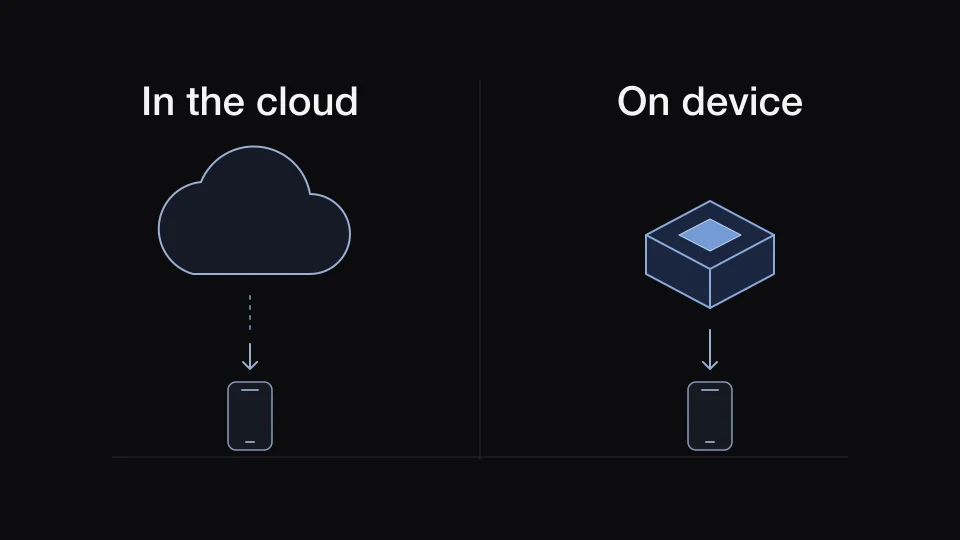
When cloud announcements carry API fees or regional exclusions, the curated Lapis model catalog shows which open weights you can download and run offline on your own Apple device.
3. Anthropic ships Claude Fable 5.2 and launches its Nasdaq IPO roadshow
What happened: On November 9, Anthropic released Claude Fable 5.2 and Claude Mythos 5.2, sharing the same base weights. Claude Fable 5.2 (claude-fable-5-2) is generally available on the Claude Platform, AWS, Google Cloud, and Azure with cyber and bio safeguards enabled at $8 per million input tokens and $40 per million output tokens ($16/$80 for an optional up-to-2.5x fast mode), while Mythos 5.2 remains gated to vetted Cyber and Life Sciences Verification Programs. One day later, Anthropic launched its IPO roadshow for 825 million Class A shares expected to price between $70.00 and $78.00 per share on Nasdaq under the ticker ANT.
Why it matters: Lowering general availability API pricing from earlier top tiers—while pairing an open cloud release with a separately gated weights variant for dual-use security evaluations—frames Anthropic’s commercial pitch right as public-market investors scrutinize frontier model economics.
4. OpenAI turns ChatGPT into a tokenized checkout and merchant channel
What happened: OpenAI rolled out two commerce primitives for the US market. On November 10, Businesses in ChatGPT entered beta with verified brand profiles, catalog feeds through Business Hub, and conversational Business Agents for eligible US online retailers. On November 13, OpenAI introduced ChatGPT Wallet, developed with American Express, Mastercard, and Visa so its shopping agent can complete transactions using temporary network payment tokens rather than raw card numbers, subject to explicit biometric approval per purchase for US ChatGPT Pro subscribers aged 18+ with eligible US cards.
Why it matters: Moving card networks directly into agent checkout shifts AI commerce away from screen-scraping toward authenticated merchant catalogs and token-scoped authorization—though availability remains strictly US-only and tied to a Pro tier for now.
5. Apple ships HomeView for $299 with Siri AI, excluding the EU
What happened: On November 13, Apple HomeView went on sale for $299 as a tabletop or wall-mounted 7-inch smart display in Australia, Canada, India, New Zealand, Singapore, the UK, and the US. Driven by Apple Intelligence and Siri AI, it handles onscreen awareness, up to six-person face recognition for personalized responses, and Home control when paired with a compatible iPhone or iPad. Apple explicitly noted that HomeView is not available in the European Union because Siri AI is currently unavailable on iOS in the EU.
Why it matters: Dedicated ambient hardware brings Apple’s personal-context Siri directly into shared rooms, while the EU carve-out underscores how regional regulatory barriers are diverging connected cloud-assisted features from strictly offline on-device workflows.
6. China’s API and multimodal push: DeepSeek App API, Qwen4-Max Preview, and Seedream 5.5
What happened: Three major Asian labs expanded hosted developer capabilities this week without opening new frontier model weights. On November 9, ByteDance published Seedream 5.5 for image generation and pixel-consistent multi-turn edits across up to 100 rounds with native RGBA transparency. On November 11, Alibaba Cloud opened qwen4-max-preview as a cloud-only preview through November 25 with a 1M context window, 393,216-token output ceiling, and text, image, and video input. On November 13, DeepSeek launched its Full-Suite App API, exposing consumer-app search, deep-thinking search, URL/PDF/Office parsing, and standalone Search, Fetch, OCR, ASR, and TTS endpoints alongside deepseek-flash.
Why it matters: Developers gain turnkey hosted search, document parsing, and vision editing APIs, while local users waiting for Qwen 4 open weights will have to rely on Alibaba’s hosted Token Plan until weights are published.
To see how llama.cpp compares with Apple’s native framework on Apple Silicon, read our MLX versus llama.cpp guide.
7. Local AI: llama.cpp v1.0.0 stabilizes local inference alongside new GGUF releases and Lapis 3.2
The open-weight and on-device ecosystem shipped foundational runtime upgrades and compact GGUF models between November 9 and November 13:
- llama.cpp v1.0.0 & ggml v1.0.0 (November 13): As detailed in the ggml-org launch post and GitHub release v1.0.0, the backbone of cross-platform local inference adopted SemVer stability. The release drops 35 long-deprecated llama.h functions, adds OCP FP8 (E4M3) KV caches, introduces host-memory MoE expert caching (moe_cache_size and moe_cache_cpu_share), adds support for recent architectures including Kimi-K3.1, Ripple, and drama-3 TTS, and hardens llama-server against SSRF and DNS-rebinding while adding a redesigned web UI and /v1/audio/speech. Downstream apps and community bindings relying on deprecated C API symbols will need to update.
- Compact Apache-2.0 GGUF models and Apple Silicon memory savings: On November 9, Zyphra open-sourced ZONOS3-Mini under Apache-2.0, a 43-language text-to-speech and voice-cloning model (100M active parameters) published with both safetensors and GGUF files for phones, laptops, and browsers. On November 10–11, Tether AI Research (qvac) released BotPsy-0.8B under Apache-2.0, a Qwen3.5-0.8B fine-tune with tool calling packaged in GGUF quantizations for mobile runtimes. On November 9, Ollama v0.40.16 cut Apple Silicon memory consumption on Qwen3.8 Flash Next by roughly 27 GiB and added support for the 65B Ripple Preview coding model.
What’s new in Lapis 3.2
On November 9, Lapis 3.2 arrived on the App Store for iPhone, iPad, and Mac. The update adds offline document chat inside Projects with cited pages and excerpts (available with Lapis Pro; see our offline PDF chat walkthrough), on-device background removal that exports transparent PNGs, Siri and Shortcuts actions on supported devices, and clearer memory/device compatibility guidance in the curated model catalog. Note that newly published third-party weights from this week—such as Zyphra ZONOS3-Mini or BotPsy-0.8B—run via external GGUF/llama.cpp tools and are not automatically included inside Lapis unless validated and added to the curated catalog.
See how document chat with page and excerpt citations works inside Lapis 3.2 Projects.
Continue to the following week’s news—including GPT-6.2, Gemini 4 Neon, Inkling 2 Mini, and Lapis 3.3—in our November 16–22 AI weekly roundup.
Sources and references (17)
- NVIDIA Announces CEO Transition
- Gemini 4 Carbon now available in Google AI Studio and the Gemini API
- Introducing Gemini 4 Hydrogen
- Claude Fable 5.2 & Claude Mythos 5.2
- Anthropic Launches Roadshow for Initial Public Offering
- Introducing Businesses in ChatGPT
- Introducing ChatGPT Wallet
- Apple HomeView available today
- Seedream 5.5: Next-Generation Image Generation and Editing
- Alibaba Cloud Model Studio Models Reference (qwen4-max-preview)
- Full-Suite App Capabilities Now Available via API
- llama.cpp v1.0.0: Stable Foundations for Local Inference
- ggml-org/llama.cpp Release v1.0.0
- Zyphra/ZONOS3-Mini Model Card
- BotPsy-0.8B: Lightweight Agentic Reasoning on Qwen3.5
- Ollama v0.40.16 Release Notes
- AI Offline LLM Chat - Lapis 3.2 on the App Store
Local execution with Lapis
Chat with compatible models on iPhone, iPad and Mac. Download them once and use local inference offline; model size depends on your device’s resources.